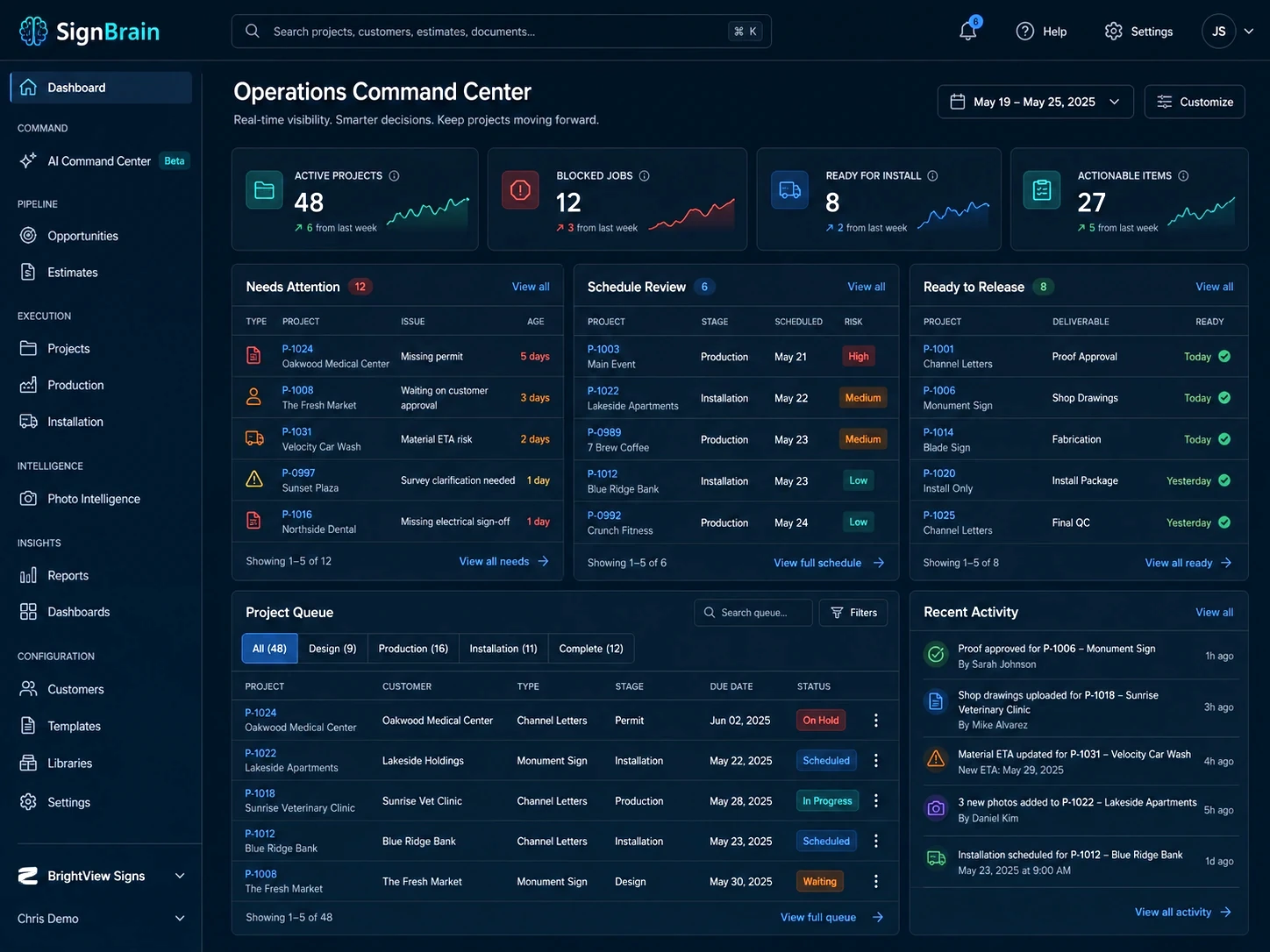
Operations Command Center
AI helps surface the work that needs attention, the jobs that are ready to move and the blockers that should not stay hidden.
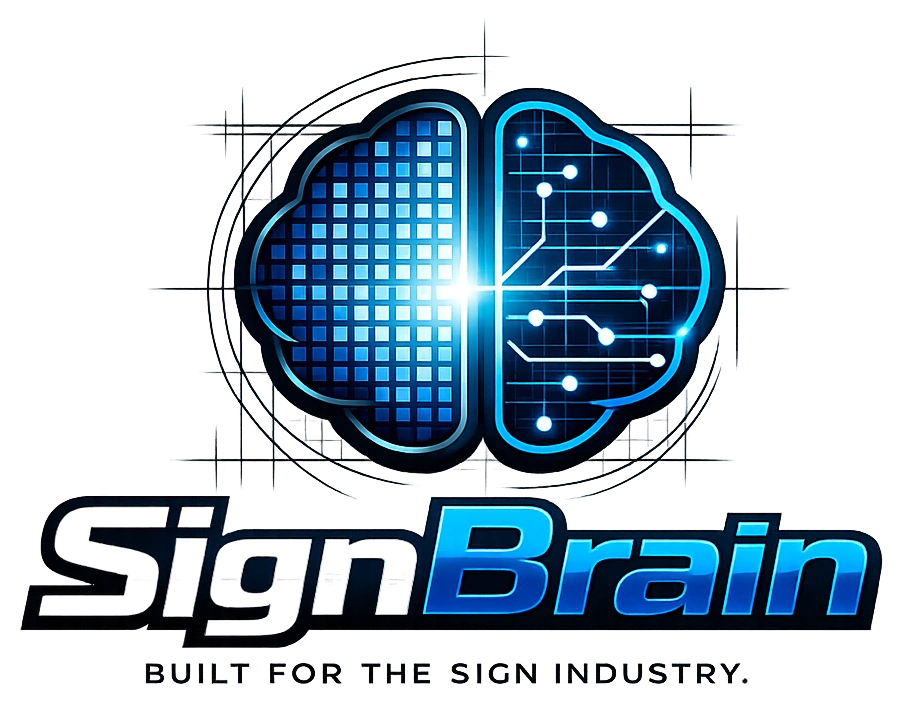
Most software adds a chatbot to an existing product. SignBrain is being built so intelligence can live inside estimating, project management, procurement, fabrication, installation and closeout.
The value is not simply generating text. It is understanding the state of the project and making the next important thing easier to see or do.
SignBrain is being designed so AI can work inside the operating context of a sign company. That includes understanding the project, surfacing exceptions, proposing actions and letting people review or approve the consequential steps.
A practical example is telling the system to create an estimate from a survey, ask a customer for missing artwork, flag a requirement or schedule a visit. The key idea is reviewable action inside the workflow—not a disconnected chatbot.
AI helps surface the work that needs attention, the jobs that are ready to move and the blockers that should not stay hidden.
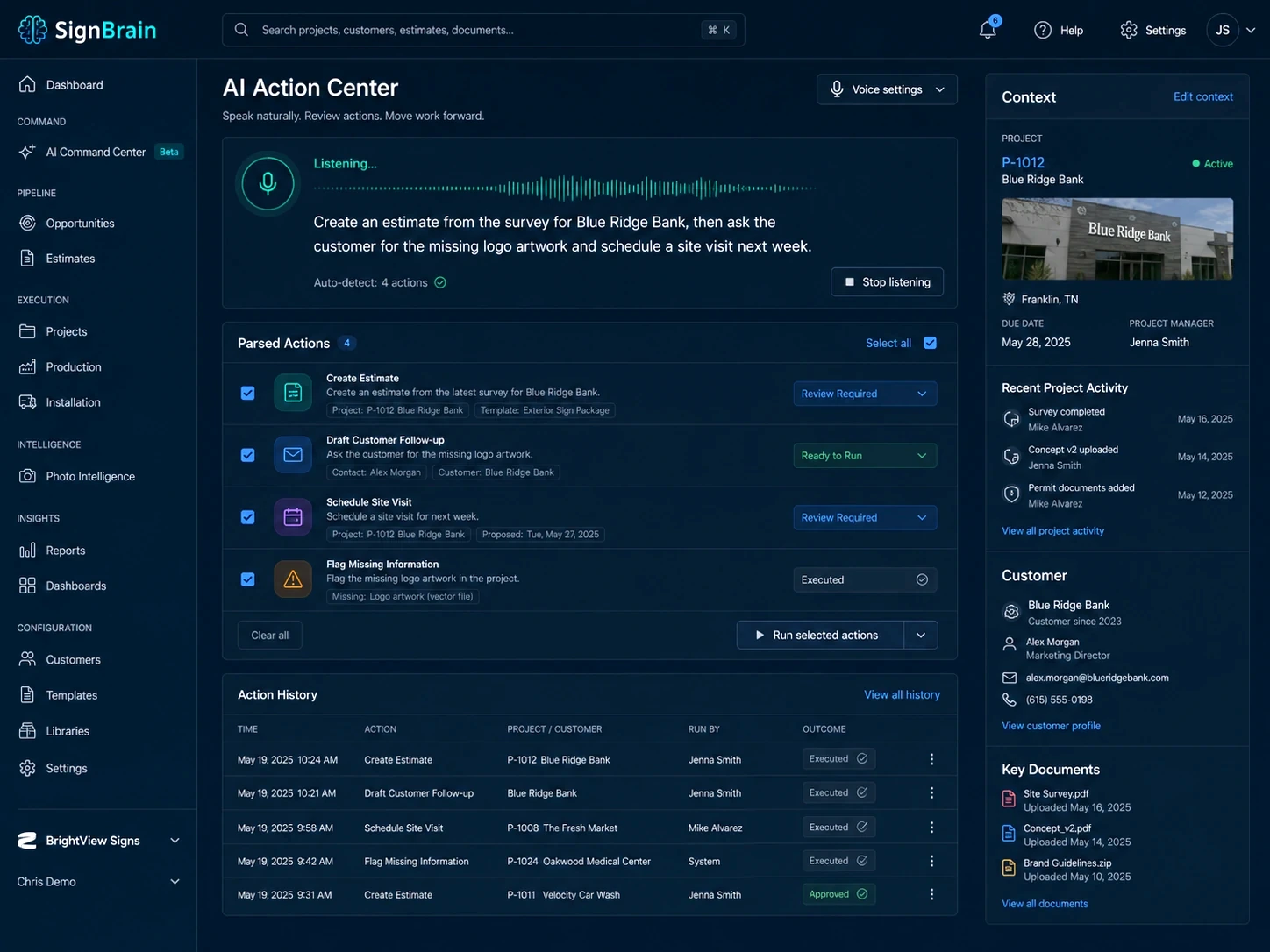
Natural language and voice can become structured actions with status, context and audit history—so the system helps execute work, not only explain it.
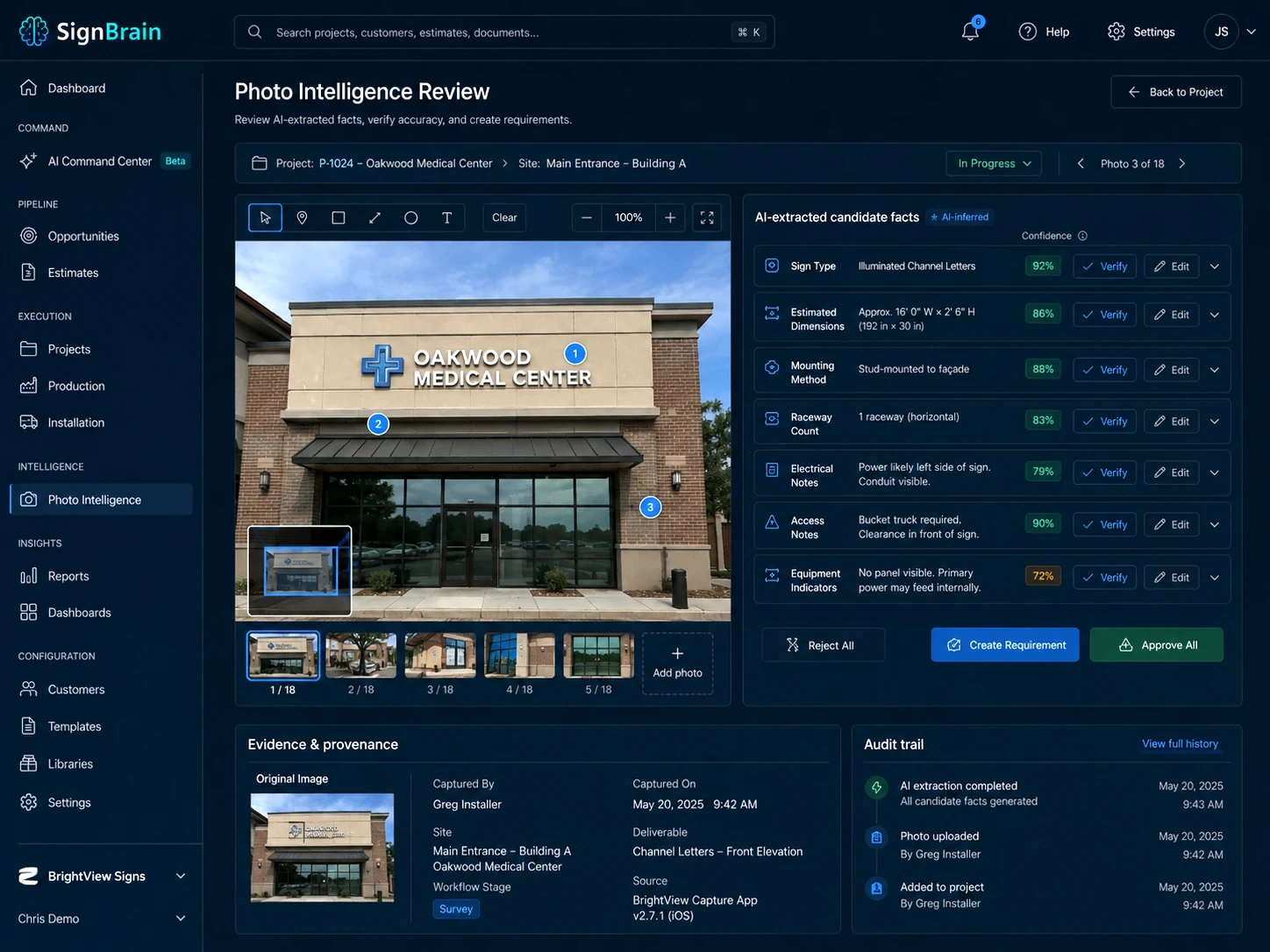
AI vision can propose candidate facts from sign photos while preserving source, confidence and human verification.
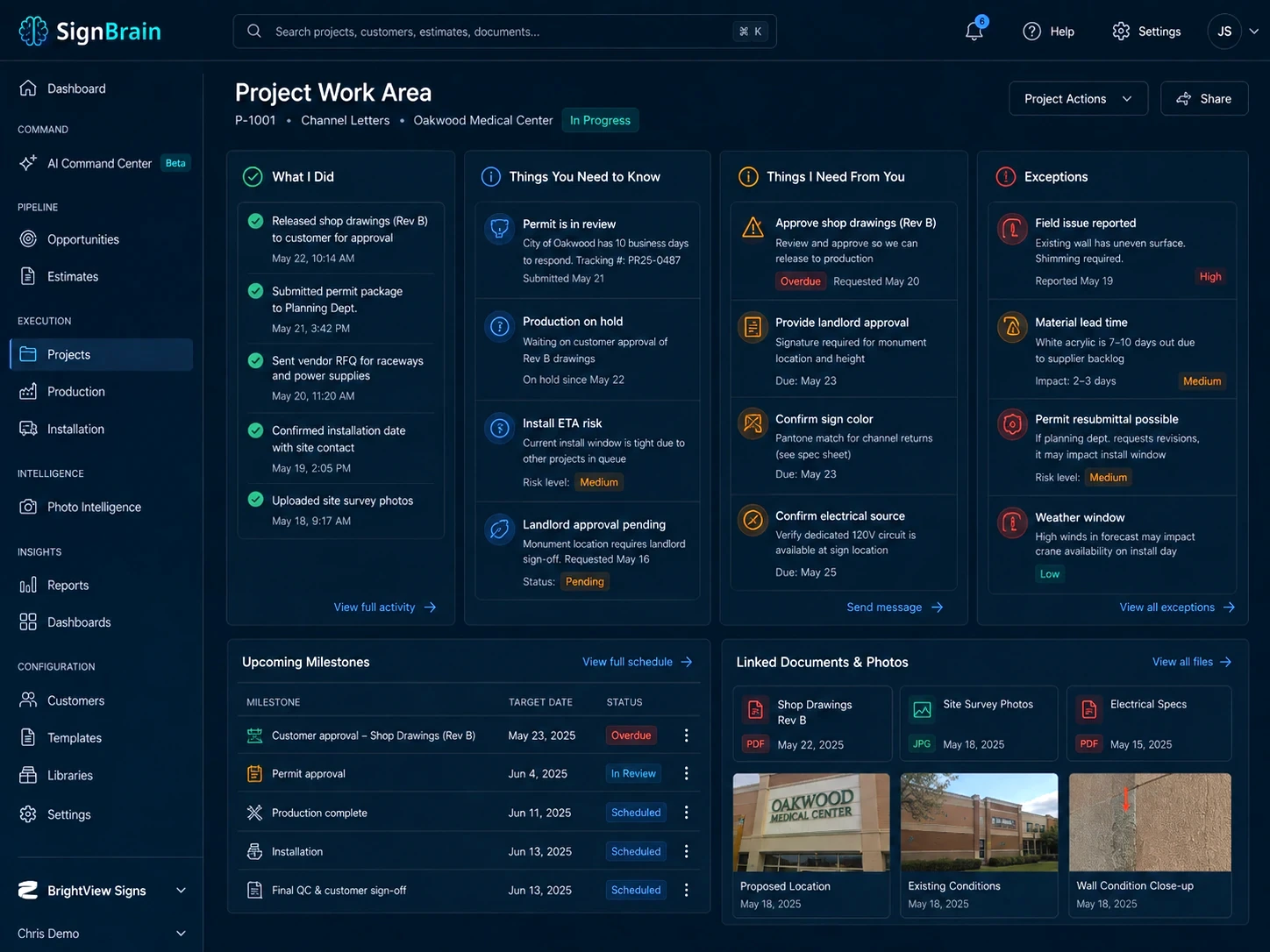
AI should make the PM workspace more useful by organizing work, context, follow-ups and exceptions around the real job.
The idea is not only a chatbot. The idea is an operating layer that can interpret a request, understand the context and present the next actions for review.
In this representative software-style demo, a spoken request becomes multiple proposed actions with context, status and an audit trail. People still approve what matters.
Customer communication starts at inquiry. SignBrain is designed to understand what is already known, identify what is still unclear and help ask the next useful question so sales and PM teams spend less time chasing information.
Ask for the missing facts needed to understand the project: sign type, quantity, location, goals, size, installation, electrical, permitting, engineering, schedule and budget.
Request artwork, brand standards, site photos, landlord approvals, survey information, access constraints or other documents based on the actual scope.
If the customer goes quiet, send a tailored follow-up, ask whether the project is still moving forward and capture a lost reason when appropriate.
Request estimate acceptance, artwork sign-off, deposits, change-order decisions and other customer actions with direct links to the right item.
Draft or send milestone updates, schedule changes, delay context, field issues and completion notifications using current project truth.
Keep outbound messages and customer responses connected to the opportunity or project so future AI and staff have the conversation context.
Templates, tone and communication rules can be tenant-configurable.
Important messages can require human review before they are sent.
Messages use known facts instead of generic canned follow-up.
Communication can remain linked to the record and the action that triggered it.
AI vision is more useful when it can reason about the customer, site, sign type, approved scope and workflow stage around the image. SignBrain is designed to preserve that context instead of treating every upload as an isolated picture.
Vision extraction can propose candidate facts such as sign type, quantity, dimensions, mounting, artwork text, material or color hints and site indicators.
AI-inferred information retains its source and confidence so it does not silently become indistinguishable from verified project truth.
The same evidence can support estimating, production questions, receiving verification, installation readiness, field issues, inspections and closeout.
SignBrain is designed to preserve original photos and distinguish candidate facts from human-verified facts, with appropriate approvals for consequential decisions.
SignBrain is being designed around company-specific context: your products, preferred materials, labor, equipment, vendors, pricing logic, margin rules, production capabilities, installation resources and historical work.
Pricing, approvals, role responsibilities and workflow gates can reflect how your organization operates.
Project documents, prior decisions and structured history can provide context instead of living in disconnected folders.
The system can focus attention on what is unusual, missing, late or contradictory instead of requiring people to inspect everything manually.
AI should reduce administrative effort and improve situational awareness—not erase responsibility. SignBrain is being designed with explicit approvals, auditability and role-based ownership for consequential actions.
No. SignBrain is being designed as an AI-native operating platform. Conversational assistance can be part of the experience, but the deeper goal is AI that works inside the workflow, understands project context, surfaces exceptions and helps create structured work.
AI is intended to work across sales, estimating, project management, procurement, fabrication, installation, closeout and management workflows. The design goal is to make intelligence part of the operating process rather than a separate feature tab.
The architecture is designed around sign-industry context such as customers, sign types, specifications, estimates, approved scope, documents, vendors, purchase orders, fabrication requirements, installation plans, photos and project history.
SignBrain is being designed so AI can interpret project context, identify missing information, recognize waiting states and dependencies, surface exceptions and reduce repetitive administrative work so project managers can focus on decisions and customer outcomes.
Yes. The product direction is for AI to help interpret project information, identify sign types and specifications, flag missing inputs and assist in building structured estimates while people retain pricing authority and approval responsibility.
SignBrain is designed to keep people accountable for consequential commercial, operational and completion decisions. AI can assist, recommend and prepare work while explicit approval remains with the appropriate role.
The product direction is to make SignBrain useful in the context of each company’s products, labor, vendors, pricing rules, equipment, workflow, margins and historical project knowledge rather than treating every shop as identical.
That is part of the product architecture. AI and vision extraction are designed to produce candidate facts such as sign type, quantities, dimensions, mounting method, artwork text, color or material hints and site or equipment indicators. Candidate facts retain source and confidence and remain distinguishable from human-verified information.
Walk us through a real process in your shop and we’ll show how SignBrain is being built to reduce repetitive work and surface what matters.